



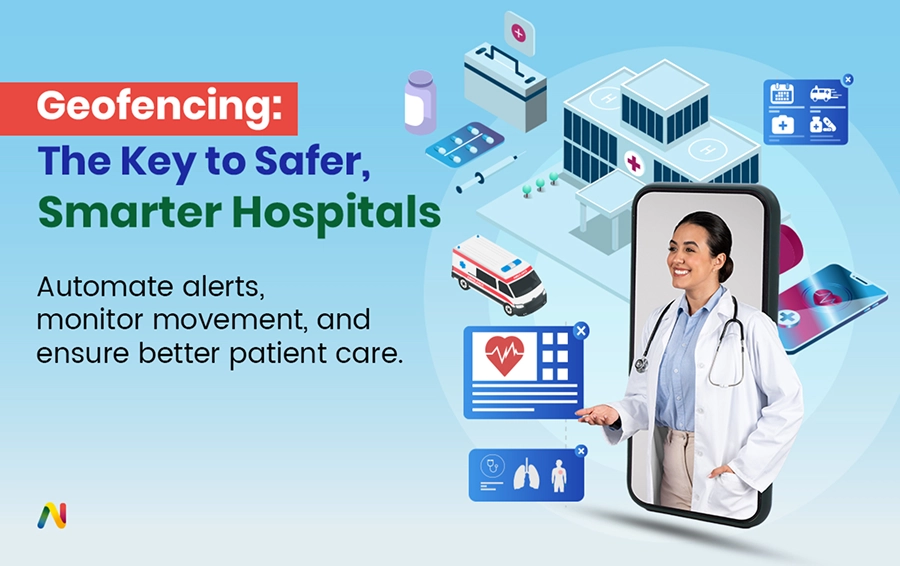
In the fast-evolving landscape of 2026, the modern medical facility no longer resembles just a building with beds. In fact, it is now considered a smart hospital infrastructure representing a living, along with a data-centric ecosystem. The major shift in this digital transformation is the precise implementation of healthcare geofencing solutions. By creating virtual boundaries around specific zones, many hospitals are now managing logistics and patient safety with a precision that was previously impossible.
So, the trend is clear, and it shows that now, the facilities are moving away from manual logs and toward specialized apps that track everything from expensive ventilators to patients with high-risk conditions like dementia. For hospital administrators and MedTech startups, this is a strategic move to lower costs, protect lives, and maximize nurse workflow optimization.
Top 3 Uses for Geofencing in Hospitals
Implementing geofencing technology addresses three of the most persistent "pain points" in hospital management: patient wandering, lost equipment, and administrative bottlenecks.
1. Patient Safety (Anti-Wandering)
- The Problem: Patients with cognitive impairments, such as those needing anti-wandering systems (For dementia/Alzheimer's), can become disoriented. Every year, hospitals face the "elopement" risk, where a patient wanders into unsafe zones like stairwells, service elevators, or exits.
- The Solution: A virtual "Geofence" created through Patient tracking app development triggers an instant alert to the nearest nurse station the moment a patient's wristband crosses a pre-defined doorway. This allows for immediate intervention without the need for restrictive physical locks, preserving patient dignity while ensuring total safety.
2. Asset Management
- The Problem: Efficiency is often killed by the "search." Research shows that nurses can spend between one and two hours per shift simply looking for mobile equipment like infusion pumps, wheelchairs, or portable X-ray machines.
- The Solution: Hospital asset tracking software provides real-time dashboards that show exactly which room the equipment is in. By automating hospital equipment tracking, facilities can reduce "equipment hoarding" and ensure that life-saving tools are always where they belong.
3. Automated Check-In
- The Problem: Long queues at the registration desk create bottlenecks and unnecessary stress for arriving patients.
- The Solution: The patient's app detects they have entered the parking lot via a geofence and automatically starts the check-in process. Using a Wayfinding SDK, the app then provides indoor navigation for hospitals to guide the patient from their car directly to the correct waiting area.
Read more: A Complete Guide for HIPAA Compliant App Development
RFID vs. Bluetooth for Hospital Asset Tracking
Choosing the right hardware is essential for a successful rollout. Hospital administrators must weigh the pros and cons of different tracking technologies to see which fits their specific budget and layout.
RFID Integration Services RFID (Radio Frequency Identification) has been the industry standard for years. It uses "choke-point" tracking, meaning sensors are placed at doors or elevators.
- Pros: Passive tags are incredibly cheap and do not require batteries.
- Cons: It is difficult to get a "real-time" view of an item if it is sitting in the middle of a hallway away from a sensor.
Bluetooth Low Energy (BLE) Beacons. Many modern hospitals are shifting toward Bluetooth Low Energy (BLE) beacons. These small, battery-powered devices broadcast a signal that is picked up by the hospital's Wi-Fi network or smartphones.
- Pros: BLE offers much more granular location data, allowing for true indoor navigation for hospitals. It is also easier to scale because most modern smartphones are already equipped to receive these signals.
- Cons: Beacons require battery management, though modern batteries can last several years.
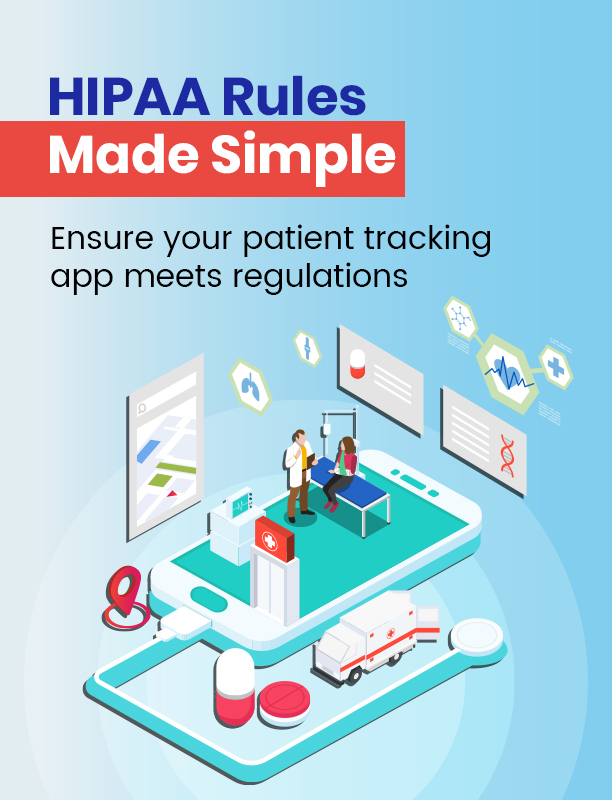
HIPAA Compliance for Patient Tracking Apps
Privacy is paramount when dealing with patient locations. In 2026, the legal landscape is stricter than ever, and any patient tracking app development must be built with "privacy by design."
When you hire IoT healthcare developers, they must ensure that location data is encrypted both "at rest" (on the server) and "in transit" (moving to a device). Furthermore, the system must maintain strict audit trails. This means administrators can see exactly who accessed a patient's location and for what reason. HIPAA compliance isn't just a checkbox; it is a fundamental part of the smart hospital infrastructure that protects the facility from massive legal liabilities and cyber threats.
Preventing Infant Abduction with Geofencing
One of the most critical safety applications of geofencing is in the maternity ward. An infant abduction is a "never event" that every hospital works tirelessly to prevent. Traditional methods like "Code Pink" drills are important, but technology provides a proactive layer of defense.
By integrating geofencing software with the building's physical security, hospitals can create a "Lockdown Zone." If an infant's tag crosses a perimeter without being "paired" with an authorized mother's or nurse's tag, the system can automatically lock doors and freeze elevators. This immediate response can prevent a crisis before it even begins.
Geofencing for Hospital Staff Management
Beyond equipment and patients, geofencing is a powerful tool for nurse workflow optimization. By analyzing movement patterns through heat maps, administrators can identify where staff spend the most time and why.
For instance, if the data shows that the nurses are constantly walking to a central supply room to gather basic items, then the hospital management might decide to place smaller supply satellite stations a bit closer to patient rooms. The change will significantly reduce fatigue and give nurses more bedside time with their patients. Furthermore, it helps in ensuring that the right staff are in the right zones during emergencies, significantly improving overall response times across the facility.
Indoor Navigation: The "Google Maps" for Hospitals
Large medical campuses can be incredibly difficult to navigate. By integrating a Wayfinding SDK into the hospital app, facilities can provide turn-by-turn indoor navigation for hospitals.
This isn't just a convenience for visitors; it's a safety feature. In an emergency, a Wayfinding SDK can guide a "Code Blue" team to the exact room through the fastest route possible, avoiding crowded hallways or elevator maintenance zones. For patients, it reduces the anxiety of getting lost, ensuring they arrive at their appointments on time and in the right department.
Read more: Discover telemedicine app development cost, HIPAA compliance, and hidden expenses
Geo-Conquesting in Healthcare: The Marketing Angle
While most hospital geofencing is internal, there is a strategic external use known as geo-conquesting in healthcare. This involves setting up virtual boundaries around competing clinics, pharmacies, or diagnostic centers.
When a potential patient enters a competitor's zone, they might receive a targeted advertisement or a notification about your hospital's shorter wait times or specialized services. While this must be handled with care to respect patient privacy, it is a highly effective way for specialized MedTech startups to reach a high-intent audience exactly when they are seeking care.
What is the Cost of Installing Geofencing in a 500-Bed Hospital?
First of all, this investment for a 500-bed facility is huge, but the same must be viewed as an efficiency play.
A typical rollout involves the following layers:
- Hardware ($100k - $200k): The expense covers the total cost of thousands of Bluetooth Low Energy (BLE) beacons or RFID tags for every bed, pump, and high-risk patient.
- Infrastructure ($150k - $250k): This includes the installation of gateways and the integration of RFID integration services into the existing network.
- Software & App Development ($150k+): Building the custom dashboards and the patient-facing Patient tracking app development.
- Maintenance: Ongoing costs for battery replacement and software updates.
While the initial cost is high, the ROI is found in reduced equipment loss (which can cost a hospital millions annually) and the massive boost in nurse workflow optimization.
Conclusion
Geofencing is a cornerstone of the modern, efficient hospital. From geo-conquesting in healthcare for marketing to the daily reality of hospital equipment tracking, this technology saves time, money, and most importantly, lives. To build these systems correctly, you need a partner that understands the unique needs of medical facilities and the complexities of IoT.
If you have made up your mind to modernize your facility with smart tracking, then you must get in touch with Netclues today. Feel free to explore our specialized healthcare IT solutions and start your transformation.
Frequently Asked Questions About Healthcare Geofencing
Q. 1 What is geofencing in healthcare?
A. Healthcare geofencing uses GPS, RFID, Bluetooth Low Energy (BLE), or other location technologies to create virtual boundaries within healthcare facilities. When a patient, staff member, or medical asset enters or exits a designated area, the system automatically triggers alerts, notifications, or workflows to improve safety and operational efficiency.
Q. 2 How does geofencing improve patient safety?
A. Geofencing helps hospitals monitor high-risk patients in real time. If a patient with dementia, Alzheimer's disease, or other cognitive impairments enters a restricted area or approaches an exit, healthcare staff receive immediate alerts, allowing rapid intervention and reducing the risk of patient wandering.
Q. 3 What is hospital asset tracking?
A. Hospital asset tracking uses location-based technologies such as RFID and BLE beacons to monitor the real-time location of medical equipment. This helps healthcare providers quickly locate critical assets like wheelchairs, infusion pumps, portable monitors, and diagnostic devices while reducing equipment loss and downtime.
Q. 4 RFID vs. BLE: Which is better for hospital asset tracking?
A. RFID is cost-effective and works well for checkpoint-based tracking, while Bluetooth Low Energy (BLE) provides more precise real-time location visibility and supports indoor navigation. The ideal choice depends on the hospital's size, tracking requirements, and budget.
Q. 5 Is healthcare geofencing HIPAA compliant?
A. Yes, healthcare geofencing systems can be HIPAA compliant when designed with proper security measures. This includes data encryption, secure access controls, audit logging, user authentication, and strict privacy safeguards to protect patient information and location data.
Q. 6 How does geofencing help prevent infant abduction?
A. Hospitals can use geofencing and wearable infant tags to establish secure perimeter zones. If an infant is moved beyond an authorized area without proper authorization, the system can automatically trigger alarms, lock exits, and notify security personnel in real time.
Q. 7 What is indoor navigation for hospitals?
A. Indoor navigation systems use BLE beacons, location services, and wayfinding technology to guide patients, visitors, and staff through complex healthcare facilities. These systems help reduce confusion, improve appointment attendance, and support faster emergency response times.
Q. 8 How much does it cost to implement geofencing in a hospital?
A. The cost varies based on facility size, infrastructure requirements, hardware selection, software development, and integration needs. For large hospitals, implementation costs may range from several hundred thousand dollars to over half a million dollars, depending on project scope and complexity.