



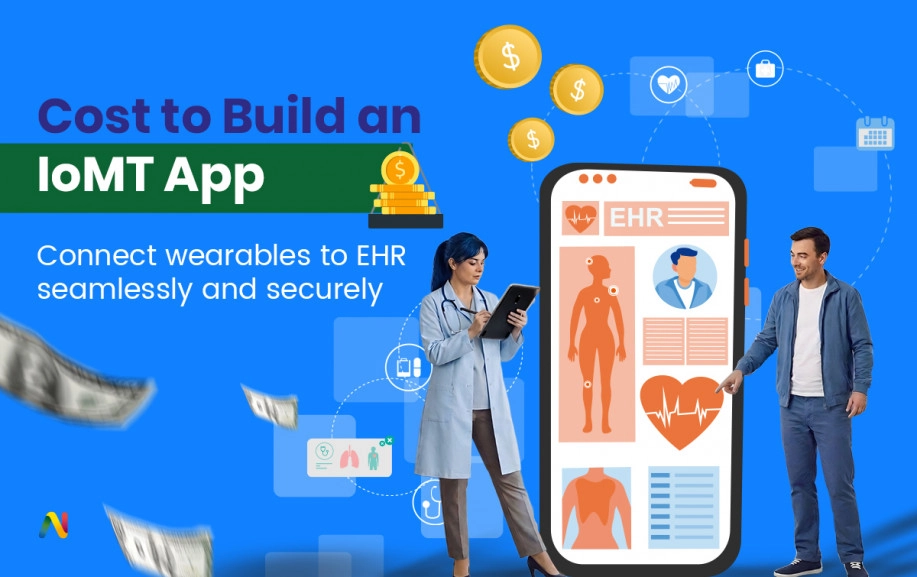
The world of healthcare is changing faster than ever. We are moving away from the days when you only saw a doctor once or twice a year. Now, doctors can stay connected to their patients every single minute through smart devices. This is where the Internet of Medical Things (IoMT) comes in. If you are a MedTech company or a hospital leader, you likely already know that the future is about data. You want to know how much it costs to build an app that pulls heart rate data from an Apple Watch or glucose levels from a glucose monitor and sends that info directly to a doctor's computer system.
Building an IoMT app isn't just about making a pretty screen; it's about building a bridge. On one side, the patient is wearing a device. On the other side, you have the Electronic Health Record (EHR), where the doctor keeps all the medical history. Connecting these two is a big job that requires modern healthcare IT solutions and a specialized IoMT app development company. This guide will break down the costs, the steps, and the tech you need to make this happen.
The Trend: Real-Time Data from Wrist to Doctor
We are seeing a massive shift in how people manage their health. Looking at AI trends for 2025, it is clear that smart data is the new standard. Millions of people now wear smartwatches that track their heart, sleep, and steps. At the same time, patients with chronic illnesses use specialized tools, such as a Continuous Glucose Monitor (CGM) API, to track their blood sugar without frequent finger pricks.
The big goal for hospitals today is Remote Patient Monitoring (RPM) software. This allows doctors to monitor high-risk patients at home. If a patient's heart rate spikes or their glucose drops, the doctor gets an alert immediately. To build this, most organizations choose to hire healthcare app developers who understand how to handle sensitive medical data without making mistakes.
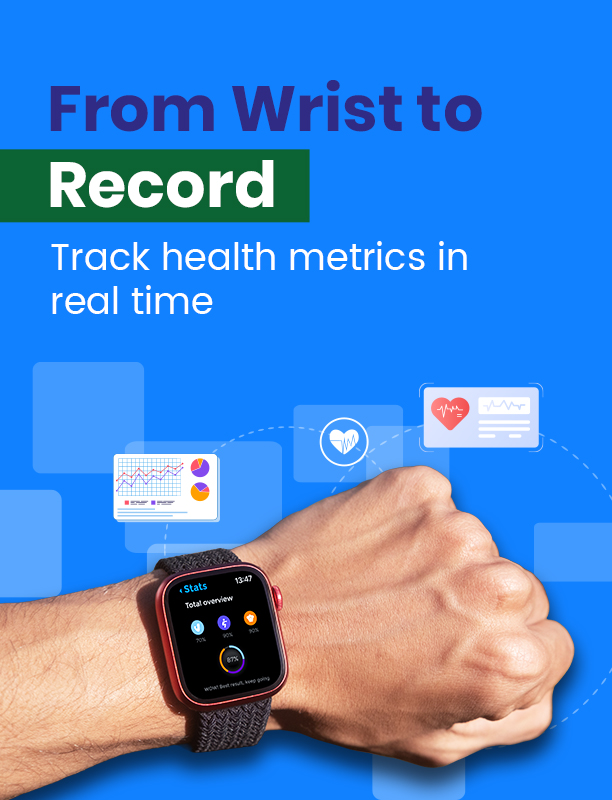
How to send Apple Watch data to Epic EHR?
When you dive into healthcare mobile app development, you see that sending data from a consumer device, such as an Apple Watch, to a heavy-duty medical system, such as Epic or Cerner, is a multi-step process. You can't just "email" the data. It has to be formatted in a way the hospital system understands.
Step 1: Gathering the Data
First, your app needs to talk to the phone. For iPhones, this means using Apple HealthKit & Google Health Connect for Android users. These are the "hubs" where health data lives on a smartphone. Your team will need to hire dedicated IoMT developers to write the code that asks the user for permission to read this data.
Step 2: The Translation Layer
Medical systems use specific "languages" called HL7 or FHIR. Think of your Apple Watch data as in English, and the hospital EHR as in French. You need a translator in the middle. This is where Custom EHR integration services become essential. They build the logic that converts a heart rate reading into a "Resource" the EHR can accept.
Step 3: The Secure Handshake
Once the data is translated, it travels through a secure tunnel. This is not just a standard internet connection. It must be a HIPAA- and GDPR-compliant data transfer. If the data isn't locked down, the hospital won't allow the connection.
Cost of HL7 integration for mobile apps
When you ask about the cost of building an IoMT app, a huge chunk of that budget goes toward integration. Connecting to an EHR isn't a "one-click" task.
The Breakdown of Expenses
Generally, a basic IoMT app can start around $60,000, but when you add EHR connectivity, that price can jump to $150,000 or even $300,000. Why? Because you are paying for Medical IoT software development that includes heavy testing. You are also paying for the hours it takes to map data fields so that a "step count" on a watch doesn't show up as "blood pressure" in the doctor's files.
Why Quality Costs More?
When you look to hire mobile app developers, you might find a cheap Wearable app development agency, but if they don't understand IoMT data interoperability, the project will fail at the hospital firewall. Interoperability means that different systems can communicate seamlessly. Setting this up takes hundreds of hours of coding and "handshaking" between servers.
Challenges of connecting wearables to EMR
It sounds simple to move data from point A to point B, but the "medical" part of the Internet of Things adds layers of difficulty.
Data Noise
An Apple Watch collects data every few seconds. A doctor doesn't want to see 10,000 heart rate readings a day. They only want to see the "outliers" or the averages. The challenge is building software that filters the "noise" so the doctor only gets the important stuff.
Connection Stability
Wearables often lose Bluetooth connection or run out of battery. Your app needs to be smart enough to store data locally and upload it later when the connection is back. This "offline mode" is a key part of Remote Patient Monitoring (RPM) software.
Device Management
For hospitals, keeping track of thousands of devices is a nightmare. This is why many are moving toward Device-as-a-Service (DaaS) healthcare. In this model, the hospital doesn't "buy" the watches; it rents the entire system, including software and support, which lowers the upfront cost.
Best API for wearable health data
If you don't want to build every single connection from scratch, you can use an API (Application Programming Interface). Think of an API as a pre-built bridge.
Human API and Terra
There are services like Human API or Terra that act as a single "plug" for all devices. Instead of writing separate code for Garmin, Fitbit, Apple, and Oura, you just connect to one of these services. They do the heavy lifting of gathering the data. This can save you a lot of money when you hire healthcare app developers, as they can focus on your app's features rather than the plumbing of the data. Moreover, the decision to hire dedicated developers makes it possible to focus on the unique features of your application.
Continuous Glucose Monitoring (CGM)
For specialized health apps, you will likely need a Continuous Glucose Monitor (CGM) API. These are more complex because the data is "life-critical." If a sugar reading is wrong, the consequences are high. This requires a much higher level of accuracy and security than a standard step-tracker.
Security requirements for IoMT data transfer
Security is the biggest "must-have." In healthcare, a data breach isn't just a legal problem; it can put lives at risk.
HIPAA and GDPR
Every single bit of data must be part of a HIPAA/GDPR compliant data transfer. This means the data is encrypted (scrambled) while it sits on the phone, while it travels through the air, and while it sits on the hospital server.
Identity Verification
The system must be 100% sure that the data from "Patient A" doesn't accidentally end up in "Patient B's" file. This requires multi-factor authentication and very strict "identity management" code. When you look for an IoMT app development company, ask them specifically how they handle patient identity.
Final Verdict: Is it Worth the Investment?
Building an IoMT app that connects to an EHR is a big project with a significant price tag. However, the benefits are even bigger. By providing real-time data to doctors, you are moving from "sick care" to "well care." You are helping doctors catch problems before they become emergencies.
Whether you decide to hire dedicated IoMT developers for an in-house project or partner with a full-service Wearable app development agency, the focus must always be on data standards and security. If you build it right, you aren't just building an app; you are building a tool that saves lives. Once the app is built, you can use healthcare online marketing solutions to help doctors and patients find and use your new tool.
Building an app that helps save lives shouldn't feel like a giant puzzle you have to solve alone. The team at Netclues is here to take the tricky tech parts off your plate. This lets you spend your energy on what really matters, helping your patients get better. Head over to netclues.com to see how we can help you build an app that makes a real difference.
Frequently Asked Questions About IoMT App Development
Q. 1. How much does it cost to build an IoMT app in healthcare?
A. IoMT app development typically costs between $60,000 and $300,000+, depending on wearable integrations, EHR connectivity, security requirements, and scalability. Simple MVPs are cheaper, while enterprise-grade remote patient monitoring systems with HL7/FHIR integration and real-time alerts require significantly higher investment.
Q. 2. What is an IoMT app in healthcare?
A. An IoMT (Internet of Medical Things) app connects wearable medical devices like smartwatches, glucose monitors, and sensors to healthcare systems such as EHR platforms. It enables real-time patient monitoring, remote care, and continuous health data tracking for doctors and hospitals.
Q. 3. How does IoMT connect wearables to EHR systems?
A. IoMT apps use APIs and healthcare data standards like HL7 and FHIR to translate wearable data into structured formats that EHR systems can understand. This ensures secure, accurate, and standardized communication between patient devices and hospital records.
Q. 4. What technologies are used in IoMT app development?
A. Common technologies include Apple HealthKit, Google Health Connect, HL7, FHIR, Python, Node.js, AWS or Azure cloud services, and wearable APIs like Fitbit, Garmin, and CGM platforms. These tools enable secure data collection, processing, and integration.
Q. 5. What is Remote Patient Monitoring (RPM)?
A. Remote Patient Monitoring (RPM) is a healthcare model where IoMT devices continuously track patient vitals and send data to healthcare providers. It helps detect early health risks, reduce hospital visits, and improve chronic disease management.
Q. 6. Is IoMT data secure for healthcare use?
A. Yes, but only if properly implemented. IoMT systems must follow HIPAA and GDPR compliance, use end-to-end encryption, secure APIs, multi-factor authentication, and strict identity management to protect sensitive patient health data.
Q. 7. What are the biggest challenges in IoMT app development?
A. Key challenges include device connectivity issues, data overload (“noise”), interoperability between systems, EHR integration complexity, offline data syncing, and maintaining compliance with healthcare regulations.
Q. 8. Can IoMT apps integrate with Apple Watch and other wearables?
A. Yes. IoMT apps commonly integrate with Apple Watch, Fitbit, Garmin, and CGM devices using APIs like HealthKit or third-party platforms. These integrations allow continuous collection of heart rate, sleep, glucose, and activity data.
Q. 9. What is HL7 and FHIR in healthcare apps?
A. HL7 and FHIR are global healthcare data standards used to structure and exchange patient information between systems. They ensure wearable data is correctly formatted and securely shared with hospital EHR systems.
Q. 10. How long does it take to develop an IoMT app?
A. IoMT app development usually takes 4 to 10 months, depending on complexity. MVPs can be built faster, while fully integrated hospital-grade systems with EHR connectivity and compliance testing take longer.
Q. 11. What is the ROI of IoMT applications?
A. IoMT apps reduce hospital readmissions, improve chronic disease management, and enable early intervention. This leads to lower healthcare costs, better patient outcomes, and increased operational efficiency for healthcare providers.
Q. 12. What APIs are used in IoMT development?
A. Popular APIs include Apple HealthKit, Google Health Connect, Human API, Terra API, and specialized CGM APIs. These APIs simplify wearable data integration and reduce development time.
Q. 13. Why is EHR integration important in IoMT apps?
A. EHR integration ensures that wearable data becomes part of a patient’s official medical record. This improves diagnosis accuracy, enables better treatment decisions, and enhances long-term patient monitoring.
Q. 14. What security standards are required for IoMT apps?
A. IoMT applications must comply with HIPAA, GDPR, ISO 27001, and use secure cloud infrastructure, encryption, audit logs, and identity verification systems to ensure patient data protection.
Q. 15. Why should companies hire IoMT app developers?
A. Specialized IoMT developers understand healthcare interoperability, device integration, compliance requirements, and secure architecture. This ensures the system is scalable, reliable, and suitable for real-world hospital environments.