



In the fast world of 2026, shoppers in the United States want things to happen right away. Nobody likes waiting for a slow website or sitting through a long app download. If a customer is standing in your store, they are ready to buy now. If they have to find your app in a store, wait for it to load, and then set up a profile, they might walk away. This is where the zero-download strategy comes into play. By partnering with an Instant app development company, retail brands are finding ways to deliver what users need in seconds. It is the modern way to bridge the gap between physical and digital stores.
The trend is simple. Retailers are letting people use their apps for specific tasks without making them download the whole thing. For reference, a user might scan a code at a parking meter to pay instantly. This kind of technology removes the wall between the customer and the sale. It makes the shopping trip feel smooth and fun rather than a chore.
Key advantages of Instant Apps for e-commerce
The biggest plus for any online store is making the path to buying as easy as possible. Most shoppers leave their carts because the checkout takes too long. By using Zero-download app solutions, you can fix this problem. These apps provide a frictionless checkout experience by tapping into the payment info already saved on a phone. There is no need for a user to re-enter their credit card or address.
Another big win is Conversion rate optimization (CRO) for apps. Usually, people download apps only from stores they visit every week. But what about the person who wants to buy one thing? An instant app lets them experience the speed of a native app without the commitment. This helps convert more casual browsers into paying customers. Because the app loads so fast, the user does not have time to get bored or change their mind. This speed is the secret weapon for any Retail mobile app development agency looking to help their clients grow.
App Clips vs. Instant Apps: A Retailer's Guide
When you look at this technology, you will see two main names. Apple has one version, and Google has another. Both are great, but they work a little differently.
What are Instant Apps? They are small versions of mobile apps that load right away. You do not have to find them in an app store. They are often called lightweight app modules (<10MB limit) because they must be very small to run so quickly.
Key Benefits for Retailers:
- Frictionless Checkout: Users scan a code to pay using saved info like Apple Pay or Google Pay.
- Higher Conversion: It stops people from leaving because they do not want to download a full app.
- Physical Triggers: You can launch these apps using stickers on shelves or links in a text message.
Comparison:
- Apple App Clips: These have a strict size limit. They are very safe and private. You can find them online, via text messages, or on maps.
- Google Play Instant: This version has a slightly bigger size limit and reaches more people on Android. You can find these even through a Google search.
How to create an App Clip for a Shopify store?
If you run a Shopify store, you can still use these tools. You will need to hire Android instant app developers or iOS experts to build the small module for you. The first step is to pick the most important part of your store. For most retailers, this is the product page and the pay button. You do not need to include the whole blog or every single page in the instant version.
Your team will then use App Clips development services to build the small piece of code. Once it is ready, you connect it to your main website. When a user visits your shop on their phone, they will see a small banner. If they tap it, the app clip opens instead of the browser. This gives them a much better experience. It is faster, looks cleaner, and makes paying for an item as easy as one tap.
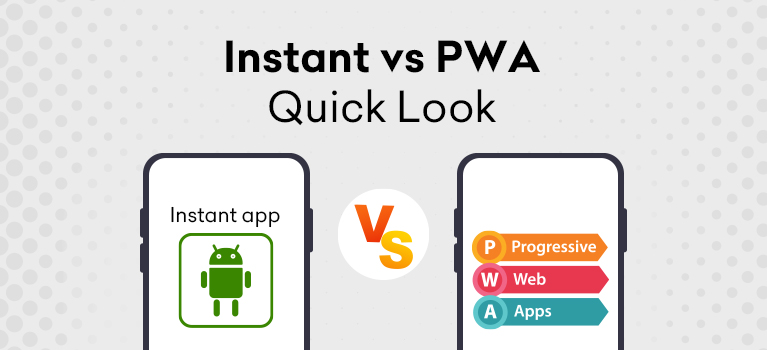
Instant apps vs Progressive Web Apps (PWA)
Many people ask if they should build a mobile website instead. These are often called Progressive Web Apps (PWAs). While PWAs are good for reaching everyone, they do not have the same power as an instant app.
The decision to hire mobile app developers in the USA shows that native apps are just smoother. They can use the phone's hardware better. For example, an instant app can make use of the mobile phone's camera or location much faster than a web page. It also feels more like a real app, which builds trust with the customer. While a PWA is great for reading information, an instant app is better for taking action, like buying a product or signing up for a deal. It gives you the best of both worlds: the speed of the web and the power of a real app.
Cost to convert a native app to an instant app
If you already have a full mobile app, you are halfway there. You do not have to start from scratch. A Retail mobile app development agency can take your existing app and break it into smaller pieces. This is called modularizing your code. Instead of the user getting the whole 100MB app, they only get the 10MB piece they need for that moment.
The cost for this is usually not too high. Most businesses find that it adds about fifteen to twenty percent to their normal app budget. This is a small price to pay for the huge boost in sales it can bring. It is an investment in making your store easier to use for the millions of people who hate downloading new things.
Increasing retail foot traffic with App Clips
One of the coolest ways to use this tech is inside your physical store. You can use a QR code app launch on your front window or on individual tables. When a customer scans the code, your app displays a special deal or a map of the store. This makes the shopping trip more interactive.
You can also use NFC tag integration (Tap to view app). The tiny chips can be hidden in posters or on product displays. Whenever, a customer taps their phone against the sign, and the app opens. The app is ideal for high-end stores. It creates a high-tech vibe that shoppers in 2026 really love. It also helps you track which displays are working best, giving you great data on how people move through your store.
By using Google Play Instant and Apple's version, you make sure that no matter what phone a customer has, they can join the fun. This specific strategy greatly helps to get more people into your store and keeps them there for much longer. It turns a boring shopping trip into a digital hunt for the best items and deals.
Precisely, the zero-download strategy is about being kind to your customers. It respects their time and their phone storage. By removing the friction, you make it easy for them to say yes to your products. Whether it is through a scan or a tap, these small apps are the future of how we buy things in the US.
The team at Netclues can help you build these smart solutions for your retail brand. They have the skills to turn your big app into a fast, instant experience that customers will love.
FAQs
Q. 1. What is an instant app?
A. An instant app is a lightweight version of a mobile application that users can access without downloading the full app. It allows customers to complete specific actions such as shopping, payments, or registrations instantly.
Q. 2. How do instant apps help retailers increase conversions?
A. Instant apps remove barriers such as app downloads and lengthy onboarding. Customers can access products, offers, and checkout flows immediately, reducing abandonment and increasing conversion rates.
Q. 3. What is the difference between App Clips and Instant Apps?
A. App Clips are Apple's lightweight app experiences for iOS, while Google Play Instant serves Android users. Both enable zero-download interactions but follow different platform requirements and limitations.
Q. 4. Are instant apps better than progressive web apps?
A. Instant apps offer deeper integration with device features and deliver a more native experience. PWAs provide broader accessibility but often lack the performance and capabilities of instant apps.
Q. 5. How much does it cost to build an instant app?
A. Costs vary based on features, integrations, and existing infrastructure. Converting an existing app into an instant app often adds approximately 15–20% to the original development budget.
Q. 6. Can Shopify stores use App Clips?
A. Yes. Shopify retailers can implement App Clips or instant app experiences for product browsing, promotions, and checkout. Developers create lightweight modules connected to the existing store.
Q. 7. How do QR codes work with instant apps?
A. A customer scans a QR code using their phone camera, which immediately launches the relevant app experience. This reduces friction and encourages faster engagement.
Q. 8. What are the security benefits of instant apps?
A. Instant apps inherit platform security controls from Apple and Google while limiting access to only the features needed for a specific task, reducing risk exposure.
Q. 9. Can instant apps support payment processing?
A. Yes. Instant apps can integrate with payment systems such as Apple Pay and Google Pay, enabling fast and secure transactions with minimal user input.
Q. 10. Do instant apps improve retail foot traffic?
A. Yes. Retailers use QR codes, NFC tags, and location-based triggers to attract shoppers into stores and encourage interaction with products and promotions.
Q. 11. Are instant apps suitable for enterprise retailers?
A. Absolutely. Enterprise retailers use instant apps for loyalty programs, promotions, product discovery, event engagement, and frictionless customer experiences.
Q. 12. Can instant apps integrate with loyalty programs?
A. Yes. Instant apps can connect to CRM platforms, loyalty systems, rewards programs, and customer databases to provide personalized experiences.
Q. 13. What industries benefit most from instant apps?
A. Retail, hospitality, entertainment, transportation, healthcare, events, and food service businesses commonly benefit from instant app technology.
Q. 14. How long does it take to develop an instant app?
A. Most projects take between four and twelve weeks depending on feature complexity, integrations, testing requirements, and platform support.
Q. 15. What is the future of instant apps in retail?
A. Future retail experiences will increasingly rely on instant interactions powered by AI, personalization, location services, QR technology, and frictionless commerce.
Q. 16. Is it worth converting an existing retail app into an instant app?
A. For many retailers, yes. Instant apps remove download friction, improve customer access, and often increase conversions without requiring a completely new application.
Q. 17. Why don't more retailers use instant apps?
A. Many businesses are unaware of the technology or underestimate its impact. Others delay adoption due to development costs or concerns about platform-specific implementation.
Q. 18. Can instant apps replace a full mobile application?
A. Not entirely. Instant apps are designed for specific tasks and quick interactions. Full applications remain valuable for loyalty programs, advanced features, and frequent users.
Q. 19. Are customers actually willing to use App Clips?
A. Yes. Many users prefer instant access over downloading a full app, especially when making a one-time purchase, checking information, or redeeming offers.
Q. 20. What causes instant app projects to fail?
A. Common reasons include trying to include too many features, poor user experience design, unclear customer journeys, and lack of integration with existing systems.