



Migrating Legacy Software to Cloud (AWS/Azure): A Cost-Benefit Analysis
In 2026, the push to move away from old servers is stronger than ever. Many businesses find that their old software is slow and hard to fix. This is why the cost of legacy to cloud migration is such a major topic in boardrooms today. Moving to platforms like AWS or Azure is not just about staying modern; it is about survival. If your systems are stuck in the past, your business will be too.
This guide looks at the real costs and benefits of making the move. Whether you are looking for Cloud migration services or trying to figure out if the investment is worth it, understanding the math behind the move is the first step.
Cost of maintaining legacy systems vs cloud
Keeping old software running is like trying to keep a very old car on the road. It might still drive, but the parts are expensive and hard to find. The Cloud TCO (Total Cost of Ownership) often shows that staying on-premise is much more expensive than people think. You have to pay for electricity, physical security, and a team to fix hardware when it breaks.
When you move to a Scalable cloud infrastructure, those physical costs go away. Instead of paying for a server that sits empty half the time, you only pay for what you use. However, you must account for the Legacy to cloud migration cost upfront. While the cloud saves money over time, the initial move requires careful planning and the help of a Legacy software modernization company.
Risks of migrating legacy data to the cloud
Every big move has risks. When you move years of data, there is always a chance that things might break. This is why many firms choose to hire cloud migration architects who can spot problems before they happen. One big risk is data loss during the transfer. If the data is not cleaned first, you might just be moving a mess to a more expensive location.
Another risk is downtime. If your system goes offline for too long, you lose money and customer trust. To lower these risks, a professional Azure cloud migration agency will often run tests in a safe environment first. They ensure that your Enterprise app re-engineering project does not disrupt your daily sales or operations.
AWS vs Azure for enterprise migration 2026
Choosing between the two giants is a big decision. AWS migration consultants will tell you that Amazon offers the most tools and has the most experience with large moves. On the other hand, Azure migration pricing is often very attractive for companies that already use Microsoft tools like Office or Windows.
In 2026, both platforms will offer amazing Cloud modernization services. AWS is great for companies that want to build custom, complex tools from scratch. Azure is often the top pick for an Azure cloud migration agency because it connects so easily to existing business software. Your choice usually comes down to what your team already knows how to use.
ROI of application modernization
The return on investment for Enterprise application modernization services is found in speed and growth, helping your business stay ahead in infrastructure. and confident in future success.
You also save money through Data center decommissioning. Once everything is in the cloud, you can turn off the power to your old server rooms. You save on rent, cooling, and hardware taxes. This often leads to a much better Cloud TCO (Total Cost of Ownership) within the first two years of the move.
Security compliance during cloud migration
Security is often the biggest worry for business owners. When you move data out of your office, you need to know it is safe. Professional Cloud migration services include setting up walls and locks in the virtual world. This ensures you comply with laws such as HIPAA and GDPR.
By using Cloud modernization services, you get better security than most small offices can afford on their own. AWS and Azure spend billions on security every year. They keep your data safe from hackers in a way that old, local servers simply cannot.
Quick Analysis: Cloud Migration Costs & ROI (2026)
Understanding the budget is vital before you start. Costs can vary wildly based on how much you want to change your code.
Cost Breakdown
- Lift & Shift (Rehost): $40,000 – $100,000. This is the lowest cost and fastest migration. You move the software as it is without changing how it works.
- Refactoring (Re-architecting): $150,000 – $400,000+. This has the highest cost but offers the best long-term ROI. It involves changing the code to take full advantage of the cloud.
- Hidden Costs: You must plan for data egress fees (the cost of moving data out), dual-running costs (paying for both the cloud and old servers during the move), and training your team.
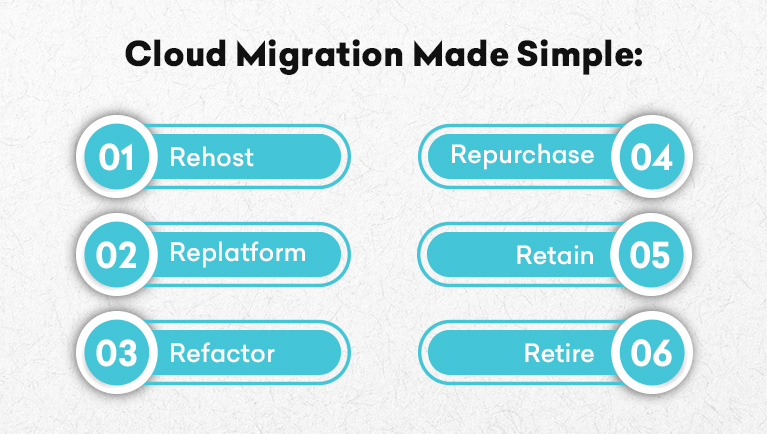
The 6 R's of Migration
When you talk to AWS migration consultants or look into Azure migration pricing, they will mention the "6 R's." This is a simple way to decide what happens to each part of your system.
- Rehost: Also known as "Lift and Shift." You move data without changing any code.
- Replatform: You make minor updates so the software fits the new cloud home better.
- Refactor: This involves a change from a monolithic to a microservices architecture. You rewrite the code so it is faster and more modern.
- Repurchase: You stop using your old software and switch to a cloud version, like moving from your old email to a web-based service.
- Retain: You keep some parts on your own servers. This is often part of a hybrid plan.
- Retire: You delete old data and apps that you no longer need. This is a great way to save money on storage.
Lift and shift vs. Refactoring (The 6 R's of migration)
Deciding between Lift and Shift vs. Refactoring (The 6 R's of migration) is the most important technical choice you will make. Lift-and-shift is great if you are in a hurry or have a small budget. It gets you out of your old data center quickly.
However, if you want your software to be truly fast and modern, you need to go from a Monolithic to a microservices architecture. This is what a Legacy software modernization company does best. They break one giant, slow program into many small pieces that work together. This makes the system much easier to update and fix in the future.
Enterprise app re-engineering and Modernization
True Enterprise application modernization services go beyond just moving files. It is about Enterprise app re-engineering. This means looking at how your business works today and making the software match that reality.
When you use an on-premises to cloud cost calculator, you will see that the more you modernize, the more you save over time. A modern app uses fewer resources and runs more smoothly. While the legacy-to-cloud migration cost is higher for a full rebuild, the result is a business that can move as fast as the market demands.
Summary of Benefits
Making the move to the cloud in 2026 is a big project, but the benefits are clear. You get a system that is safer, faster, and cheaper to run. You stop worrying about hardware breaking and start focusing on growing your business. By working with the right Azure cloud migration agency or hiring the right AWS migration consultants, you can ensure the move is a success.
The cloud is no longer the future; it is the present. Taking the time to do a proper Cloud TCO (Total Cost of Ownership) check will show you that the cost of doing nothing is much higher than the cost of moving.
Making the jump to the cloud requires a partner who understands the deep technical needs of your business. At Netclues, we specialize in helping companies navigate the complex path of digital growth. Whether you need to hire cloud migration architects for a total system rebuild or just need a clear plan for your next move, our team is ready to guide you. We bring the expertise to handle everything from initial planning to final Data center decommissioning, ensuring your business stays ahead of the curve.
Q. 1. What is the average cost of migrating legacy software to the cloud in 2026?
A. Costs vary based on strategy. A "Lift & Shift" (Rehosting) typically ranges from $40,000 to $100,000. However, deep "Refactoring" or re-architecting your software for a microservices model can cost $150,000 to $400,000+. While more expensive upfront, refactoring offers the highest long-term ROI through optimized resource usage.
Q. 2. How does the 6 R's migration framework work?
A. The 6 R's include: Rehost (move as-is), Replatform (minor updates), Refactor (rewrite code for cloud), Repurchase (switch to SaaS), Retain (keep on-premise), and Retire (delete). Choosing the right "R" for each application is critical for balancing migration speed with long-term performance.
Q. 3. What are the biggest risks of legacy data migration?
A. The primary risks include data loss, corruption during transit, and extended downtime. Furthermore, moving "dirty data" can lead to increased storage costs. To mitigate these, Netclues architects run extensive validation tests and use sandboxed environments to ensure zero disruption to operations.
Q. 4. AWS vs. Azure: Which is better for enterprise migration in 2026?
A. AWS is often preferred for complex, custom builds due to its vast toolset. Azure is usually the top choice for enterprises already integrated into the Microsoft ecosystem (Office 365, Active Directory), as it offers seamless connectivity and often more aggressive pricing for existing Windows users.
Q. 5. What is Cloud TCO and why does it matter?
A. Total Cost of Ownership (TCO) compares the direct and indirect costs of the cloud versus on-premise servers. On-premise TCO includes electricity, cooling, floor space, and hardware maintenance. Cloud TCO, while involving subscription fees, typically results in a 30-50% saving over 3 years due to the elimination of physical infrastructure.
Q. 6. Can I modernize my apps without taking them offline?
A. Yes, through a phased migration or "blue-green deployment." A professional cloud migration agency will build the new system in parallel with the old one, switching traffic only after the cloud environment is fully tested, resulting in near-zero downtime for your customers.
Q. 7. How does a microservices architecture improve my business?
A. Unlike a monolithic "one-block" system, microservices break your software into small, independent parts. This means if one part needs an update, you don't have to take down the whole system. It leads to faster updates, easier troubleshooting, and better scalability during high-traffic events.
Q. 8. Is the cloud more secure than my local server?
A. In almost all cases, yes. AWS and Azure provide enterprise-grade security, including automatic patches, advanced DDoS protection, and multi-layered encryption that small to mid-sized businesses cannot afford to implement on their own.
Q. 9. What is Data Center Decommissioning?
A. This is the process of physically shutting down your old server rooms once migration is complete. It allows you to save significantly on real estate rent, cooling costs, and specialized hardware taxes, providing an immediate boost to your bottom line.
Q. 10. How do I ensure GDPR or HIPAA compliance in the cloud?
A. Professional cloud migration services include configuring "Compliance as Code." Azure and AWS have specific data centers and settings designed to meet these regulations. We ensure your data is encrypted at rest and in transit, with strict access controls to meet legal standards.