



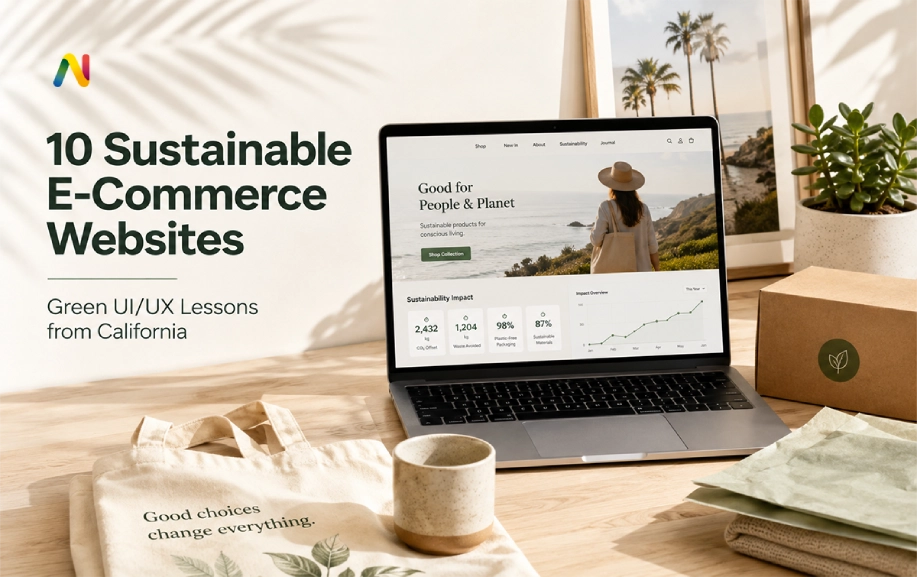
The green consumer economy is booming across the West Coast. In big hubs of San Francisco and Los Angeles, shoppers actively look for brands that care about the planet. However, a sustainable mission means nothing without premium website infrastructure. Modern green consumers abandon slow, confusing, or clunky shopping carts.
High-performance design is an environmental and financial necessity. When page load times lag, you lose conversions and waste server resources. To stay competitive, brands need an efficient California retail website development agency to write clean code. Partnering with a team that provides specialized e-commerce website development services ensures your storefront operates fast enough to convert eco-conscious intent into real revenue.
High-Scale Custom Frameworks & Enterprise Solutions
Thrive Market
Thrive Market is the one that relies on a strict membership model for selling organic groceries. When a user first lands on the site, the interface gates the catalog behind a personalized onboarding quiz. This design pattern protects their pricing model and gathers valuable data before the shopping experience starts. The user onboarding flow progresses systematically from the initial landing page to unlocking the custom storefront environment.
Design & Tech Takeaway
The onboarding quiz makes a credible data-filtering funnel. The front-end framework dynamically alters the next question on the basis of previously given answers. If a user selects a gluten-free diet, the system hides dairy-heavy options later in the flow. This structure lets the back-end database customize the personal dashboard instantly.
For the brands that are wondering how to build subscription e-commerce site frameworks for keeping the users engaged, such quizzes help. Gating the catalog is a way to support the brand segment marketing lists and customize product feeds. The key challenge lies in balancing data collection with user patience. If the quiz takes too long or lags on mobile devices, users drop off. Our team builds these onboarding funnels using asynchronous JavaScript processing. This keeps the quiz moving without full-page reloads, ensuring high completion rates for brands seeking a top-tier San Francisco web development agency.
Grove Collaborative
Grove Collaborative emphasizes automated home delivery for natural cleaning supplies. Their platform relies heavily on a crisp and predictive subscription cart system. The site tracks how often a household uses items like dish soap or paper towels, then automatically schedules the next delivery.
[User Purchase History] ➔ [A Predictive Algorithm] ➔ [Auto-Populated Cart] ➔ [Pre-Shipment Alert]
Design & Tech Takeaway
The system accurately proceeds with the calculation of usage cycles based on historical buyer behavior. When a user logs in, their cart is often pre-populated with items they are running low on. The interface clearly displays the shipping schedule and lets users skip, delay, or add items with a single click.
For those who want to know how to build subscription e-commerce site databases that handle recurring revenue smoothly, it is important to check Grove’s logistics layer. The system automates billing, inventory checks, and shipping while preventing mistakes with pre-shipment alerts and one-click order updates.
Avocado Green Mattress
Avocado Green Mattress sells high-end, eco-friendly mattresses. Because their products carry a premium price tag, building consumer trust is their primary goal. The site accomplishes this by cleanly integrating heavy sustainability credentials right into the main browsing space.
Design & Tech Takeaway
The design team performs the task of placing trust badges, such as GOTS Organic certification and B-Corp marks, prominently on mobile-responsive screens. Instead of burying these certificates in a deep footer, they live directly beneath the product titles and add-to-cart buttons.
Displaying these specific badges without cluttering the limited space on mobile screens requires careful front-end layout planning. The developers use lightweight SVG graphics that scale perfectly across all screen sizes without slowing page load time. They also use micro-interactions; tapping a badge opens a small, fast-loading modal window that explains the certificate in simple terms. The act keeps the user on the page while validating the brand's premium pricing. When creating a custom e-commerce web design, carefully mapping out badge placement is done to ensure your environmental compliance boosts conversion rates without distracting the buyer.
Reformation
Reformation is another highly trusted sustainable fashion brand that uses a modern headless commerce platform. Separating the user interface from the database lets the team update visuals quickly without affecting site stability.
Design & Tech Takeaway
Reformation's "RefScale" shows the carbon, water, and waste saved compared to standard clothing. Because the site uses a headless framework, this data tracker pulls information instantly via API calls. The user experiences zero lag when shifting colors or sizes, even though the site updates the sustainability metrics in real time.
For businesses seeking a custom e-commerce web design that feels like a modern editorial magazine, headless architecture is the gold standard. It keeps page load speeds exceptionally fast, which satisfies both eco-conscious shoppers and search engine algorithms. Our engineers specialize in building headless architectures with modern frameworks, giving you total design freedom and unmatched page performance.
Mastering E-Commerce User Experience on Specialized Frameworks
EarthHero
EarthHero acts as a massive marketplace for thousands of disjointed eco-friendly products. Navigating this vast catalog requires a complex mega-menu and a fast, faceted search tool.
[Search Bar: "Straws"] ➔ [Faceted Filters: Bamboo / Metal / Silicone] ➔ [Instant Grid Update]
Design & Tech Takeaway
This website relies on a structured filtering layout. Here, the key users can filter products by specific environmental values, such as "Vegan," "Zero Waste," or "BPA-Free." The search bar uses predictive text typing to guess what the shopper wants before they finish writing the word.
Managing thousands of product variations can easily ruin the e-commerce user experience if the search results take more than a second to load. EarthHero solves this by using an Elasticsearch database that processes complex queries instantly. The layout uses clean, collapsible filter accordions on mobile devices to keep the interface tidy. If your catalog features a wide variety of items, optimizing this search journey is vital. Our design team focuses heavily on catalog architecture, building intuitive filtering flows that guide shoppers directly to the exact product they want without causing search fatigue.
Outerknown
Outerknown was originally founded by professional surfer Kelly Slater and relies on rich lifestyle imagery and looping background videos to sell sustainable coastal clothing. The product pages feature dynamic impact timelines that visually map out how each piece of clothing protects the oceans.
Design & Tech Takeaway
The biggest challenge in this case is of maintaining fast load times while hosting heavy video files and large images. High-res files often cause pages to stutter, driving away mobile users seeking quick Los Angeles e-commerce design solutions.
To fix this, Outerknown uses an advanced content delivery network (CDN) to serve compressed video files that play silently without blocking the rest of the page from loading. The impact timelines use clean CSS animations instead of heavy graphics. This technical choice keeps the site light and highly responsive. When providing tailored growth plans, we emphasize that beautiful visuals mean nothing if your site crashes on a mobile connection. We help brands compress assets into modern WebP formats and optimize video rendering scripts so your brand storytelling looks spectacular without sacrificing performance.
Pela Case
Pela Case is engaged in making compostable phone cases and uses aggressive cart-up-sell integrations to boost its average order value (AOV). When a user adds a phone case to their cart, a slide-out drawer appears instantly, showing matching screen protectors or liquid sealants that are also fully compostable.
Design & Tech Takeaway
The site also uses smart exit-intent popups. If a user moves their mouse toward the browser's close button, a lightweight deal block slides into view, offering a bundle discount.
These interactive widgets must function smoothly to maintain a smooth e-commerce user experience. If a slide-out cart lags or breaks in mobile viewports, the user will leave in frustration. Pela Case builds these upsell engines using lightweight vanilla JavaScript rather than bulky third-party apps. This choice keeps the cart code fast and clean. Our development philosophy mirrors this approach. We build custom cart logic directly into your store's theme, giving you high-converting upsell tools that load instantly and drive revenue without slowing down the site.
MATE the Label
MATE creates organic cotton clothing using local supply chains. The digital setup in this category focuses on the strategies for regional localization. The greatest advantage is that it instantly detects the visitor's location, displays accurate currency options, clear shipping costs, and localized manufacturing stories.
[Visitor IP Detected] ➔ [Set Currency & Shipping] ➔ [Display Localized Supply Chain Data]
Design & Tech Takeaway
The particular layout uses a minimalist grid foundation, wherein the large text blocks highlight their ethical manufacturing process in Los Angeles, aligning with the regional pride of their core consumer base.
Building a clean, minimalist layout requires professional custom e-commerce web design expertise. Without proper spacing, a simple layout can look cheap instead of premium. MATE the Label uses precise typography and balanced whitespace to keep product grids clean on small phone screens.
The back-end relies on automated IP-detection tools that route users to the correct localized store view without forcing them to click a country flag. Our agency builds these seamless global configurations to ensure your international users enjoy a frictionless shopping experience from their very first click.
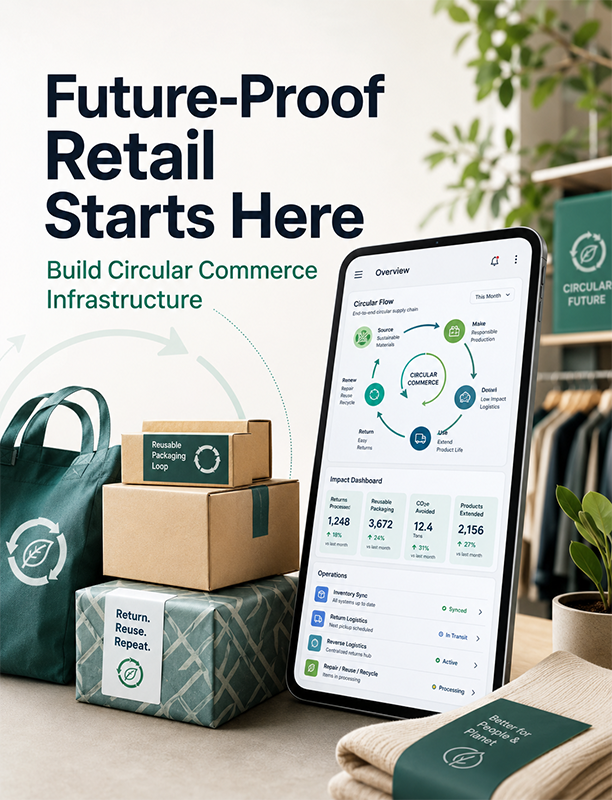
Future-Proofing Retail with Circular Infrastructure Apps
Patagonia (Worn Wear Hub)
Patagonia operates the gold standard of circular commerce through its Worn Wear Hub. This system allows customers to trade in their used jackets for store credit. The used items are repaired and resold on a dedicated section of the site.
Design & Tech Takeaway
From a technical perspective, this requires managing a complex reverse logistics API database. The system must track brand-new inventory and unique, single-item used products under one user profile ecosystem.
The customer interface makes it easy to check the trade-in value of an old item and print out a prepaid shipping label. The back-end then updates the user's digital wallet automatically once the item arrives at the warehouse. Integrating a trade-in program requires deep API connections between your web store, warehouse management systems, and customer loyalty software. Our enterprise development team has extensive experience building custom API integrations, enabling your brand to run complex circular commerce models without confusing your customer support team.
Christy Dawn
Christy Dawn makes use of a regenerative farm-to-closet business model. They invite customers to invest directly in acres of cotton farmland, creating a unique community-funded product line. The brand uses immersive storytelling aesthetics to explain this process to shoppers.
[Farm Investment Story] ➔ [Interactive Visual Map] ➔ [Direct Product Pre-Order Loop]
Design & Tech Takeaway
The interface uses advanced front-end technologies (React/HTML5) to create smooth-scrolling animations. When a user scrolls down, they would see an interactive visual map tracking the lifecycle of the cotton from seed to dress.
These intricate designs offer invaluable sustainable UI/UX lessons for modern retailers. The developers use asset-preloading scripts to ensure these interactive elements do not degrade overall site speed. The layout feels artistic yet functions like a highly optimized conversion engine, leading users naturally toward a pre-order button. Striking a balance between creative storytelling and quick checkouts is difficult. We specialize in building custom, asynchronous interactive elements, allowing your store to tell a deep brand story while maintaining rapid checkout performance.
Sustainable Brand UI UX Lessons for the Next Decade
As we look toward the future of digital retail, the expectations of eco-conscious consumers continue to rise. Stores can no longer rely on simple green color schemes or generic sustainability statements. True digital sustainability requires building clean, minimal code that directly reduces server energy use and cuts down load times. Implementing these sustainable UI/UX lessons for brands across your store helps your business adapt to shifting consumer habits and search engine updates.
To attain a high level of performance, modern platforms must move toward decoupled, headless web setups. By separating the user-facing design layer from the heavy back-end business logic, you gain the freedom to create unique shopping journeys without causing mobile lag. Furthermore, integrating predictive checkout apps and clean, automated data feeds enables your store to display transparent environmental metrics in real time. Investing in professional e-commerce website development services ensures your store operates efficiently, uses less energy for data transfer, and delivers a superior e-commerce user experience.
Partner with a California Retail Website Development Agency
Building a successful eco-friendly digital store requires balancing beautiful brand storytelling with clean code and smart data structures. The ten brands analyzed above dominate the market because their systems are built on strong technical foundations. They combine custom user tracking, fast mobile layouts, and smooth database connections to turn casual website visitors into loyal brand advocates.
If you want to grow your retail business, you need a team that knows how to build these complex features from scratch. Netclues is an experienced California retail website development agency ready to bring your digital vision to life. We deliver top-tier e-commerce website development services, tailored custom e-commerce web design, and data-driven digital marketing services built specifically for your target market. Allow our team to handle the technical heavy lifting.
Ready to Build the Next Market-Leading E-Commerce Storefront?
A beautiful, sustainable mission requires a high-performance digital engine to succeed. At Netclues, we combine cutting-edge custom e-commerce web design with seamless back-end database engineering to build online stores that convert browsers into brand advocates.
So, if you are looking for a specific requirement, such as deploying headless commerce, launching a predictive subscription framework, or optimizing regional SEO visibility, the e-commerce website development services by Netclues are engineered to scale your retail vision.
Sustainable E-Commerce Websites in California: Common Questions Answered
Q. 1. What are sustainable e-commerce websites?
Sustainable e-commerce websites are online stores designed to reduce unnecessary digital resource consumption while delivering a fast, accessible shopping experience. They typically use optimized images, lightweight code, efficient hosting, streamlined scripts, responsive design, and efficient data delivery. Sustainability also extends to features such as transparent product information, ethical sourcing, circular commerce, and environmentally focused customer experiences.
Q. 2. Why does sustainable UI/UX design matter for e-commerce?
Sustainable UI/UX design matters because efficient digital experiences can improve both environmental performance and customer engagement. Reducing page weight, unnecessary animations, third-party scripts, and excessive data transfers can help pages load faster. Better performance also reduces friction during browsing and checkout, potentially lowering abandonment rates while creating a smoother experience for mobile shoppers.
Q. 3. What are the main benefits of sustainable e-commerce development?
The main benefits include faster page performance, improved mobile usability, lower unnecessary data transfer, stronger accessibility, and potentially better conversion rates. Sustainable development can also make an e-commerce platform easier to maintain by reducing technical complexity. For growing brands, efficient architecture, optimized APIs, and scalable infrastructure can support long-term performance without sacrificing design or functionality.
Q. 4. How much does it cost to build a sustainable e-commerce website?
The cost varies significantly based on catalog size, platform, custom functionality, integrations, design complexity, and infrastructure requirements. A basic optimized storefront can cost considerably less than an enterprise headless commerce platform with personalization, subscriptions, AI workflows, and multiple integrations. Businesses should evaluate total cost of ownership, expected conversion improvements, maintenance requirements, and potential ROI rather than focusing only on development costs.
Q. 5. What ROI can businesses expect from sustainable e-commerce design?
ROI depends on the existing website's performance, traffic, conversion rate, average order value, and implementation costs. Improvements such as faster pages, simpler checkout, better product discovery, and stronger mobile UX can reduce friction and increase completed purchases. Businesses should establish baseline metrics before development and measure conversion rate, Core Web Vitals, bounce or engagement metrics, average order value, and revenue after launch.
Q. 6. How long does it take to develop a sustainable e-commerce website?
Development timelines depend on the platform, design requirements, integrations, catalog complexity, and level of customization. A relatively straightforward storefront may take weeks, while an enterprise platform involving headless commerce, subscriptions, ERP connections, personalization, and custom APIs can take several months. Discovery, UX planning, development, testing, security reviews, migration, and optimization should all be included in the project timeline.
Q. 7. How can I make an existing e-commerce website more sustainable?
Start by auditing page weight, images, JavaScript, fonts, third-party applications, server response times, and unnecessary tracking scripts. Compress and modernize media, remove unused code, implement caching and CDN delivery, optimize critical rendering paths, and simplify user journeys. Prioritize changes based on measurable performance impact rather than redesigning everything at once. Continuous monitoring helps prevent performance regressions after updates.
Q. 8. Is headless commerce better for sustainable e-commerce websites?
Headless commerce can support sustainable e-commerce when implemented correctly, but it is not automatically more sustainable. Separating the frontend from backend services can enable highly optimized experiences, flexible content delivery, and selective API usage. However, excessive API calls, poorly optimized JavaScript, or complex infrastructure can increase resource consumption. The best architecture depends on business requirements, traffic, functionality, and performance goals.
Q. 9. What integrations are important for sustainable e-commerce platforms?
Important integrations depend on the business model but may include payment gateways, ERP and inventory systems, CRM platforms, shipping services, product information management, analytics, subscription billing, customer loyalty systems, and marketing automation. API architecture should minimize unnecessary requests and efficiently synchronize data. For advanced retailers, AI recommendation engines, predictive inventory tools, and automated personalization can further improve operational efficiency.
Q. 10. How can AI and automation improve sustainable e-commerce?
AI and automation can reduce operational friction by automating product recommendations, customer support, inventory forecasting, personalization, content workflows, and marketing segmentation. Predictive systems can help businesses anticipate demand and reduce inefficient inventory decisions. AI should be integrated selectively, however. Heavy or unnecessary AI features can increase infrastructure requirements, so workflows should deliver measurable business value while maintaining performance, privacy, and security.
Q. 11. What are common mistakes when building a sustainable e-commerce website?
Common mistakes include treating sustainability as a color palette, adding excessive animations, relying on too many third-party apps, uploading unoptimized media, and prioritizing visual effects over performance. Other risks include poor mobile optimization, complicated checkout flows, weak accessibility, insufficient security testing, and choosing complex architecture without a clear business need. Sustainability should be treated as an ongoing performance and engineering discipline.
Q. 12. What are the future trends in sustainable e-commerce development?
Future sustainable e-commerce will increasingly combine lightweight interfaces, headless architecture, efficient APIs, edge delivery, intelligent caching, AI-assisted personalization, circular commerce, and transparent product-impact information. Brands are also likely to focus more on measurable digital efficiency rather than superficial sustainability messaging. The strongest platforms will balance environmental considerations with accessibility, security, conversion performance, automation, and scalable technology.