



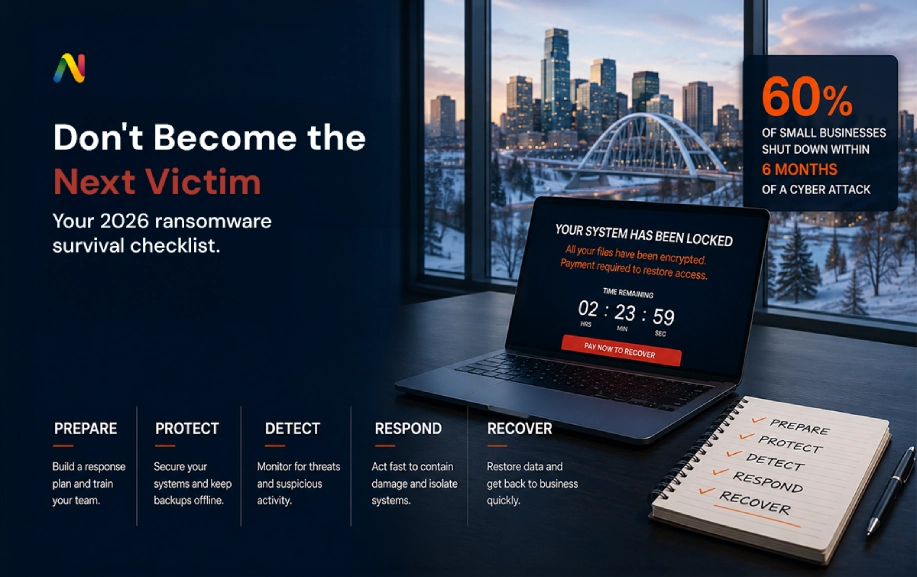
Before getting into the ways to survive a ransomware attack in 2027, it is important that you understand the urgency of the situation. Imagine it is 2:00 AM. You are parked on Whyte Ave, maybe grabbing a late snack after a long shift. Your phone buzzes. It is a notification from your server. But it isn't a routine update. It is a ransom note. Your entire customer database, proprietary code, and payment systems are protected by military-grade encryption.
In 2027, this shouldn't be a business-ending event. Yet, for many, it is. The reality is that ransomware in 2027 has evolved. It is no longer just about locking files. We now face "Quadruple Extortion," where hackers encrypt your data, steal it, threaten a DDoS attack on your website, and contact your clients directly to tell them their data has been leaked.
The prime goal must be to shift from "Victim" to "Operational" in record time. The professional support aims to protect your ROI and your reputation, and here is a guide that will help you plan for survival in the Edmonton market.
The 2027 Threat Landscape: Why Edmonton is a Ransomware Hub
Edmonton has indeed turned out to be a tech powerhouse. From the ICE District to the various startups emerging from the University of Alberta, our city is considered to be a beacon for innovation. However, this growth has put a target on our backs.
Local B2B firms and companies investing in Secure FinTech app development in Canada are prime targets. Why? Because you handle high-value data. In 2027, hackers use AI-driven breaches to find the tiniest cracks in your code. They look for weak APIs or unpatched plugins. If you didn't hire dedicated security-focused developers during your build phase, your app might as well have a "Welcome" mat for cybercriminals.
The Cost of Silence: The $10k/Hour Problem
The cost of business downtime in Edmonton is overwhelming. For an Alberta SME, every single hour that your systems are offline costs roughly CA $10,000. It includes lost sales, wages for idle staff, and the long-term blow to your brand. Many businesses think they can ignore the problem or quietly pay the ransom. But in the year 2027, silence can prove to be significantly expensive. You need Cybersecurity for Small Business Edmonton experts who understand that every minute counts. Without a plan, you are just watching your bank account bleed out. This is why proactive cybersecurity support for small businesses is no longer an option; it is a necessity for survival.
The PIPA Trap: Alberta's Legal Reality for Data Breaches
In the province of Alberta, it is important to comply with the law. The Personal Information Protection Act (PIPA) is considered to be the regulatory hammer that can hit harder than the hackers themselves.
Navigating PIPA
If you store customer names, addresses, or credit card info, you are responsible for it. A PIPA compliance audit is the only way to ensure you aren't leaving yourself open to massive provincial fines. In 2027, the Office of the Information and Privacy Commissioner (OIPC) increased its oversight.
Mandatory Reporting
Under PIPA, if there is a "reasonable step to believe" that a breach could cause "significant harm" to individuals, you must report it. Significant harm includes identity theft, fraud, or even hurt feelings/reputation damage. If you try to hide a ransomware attack and the OIPC finds out, the legal fees will far outweigh the ransom. It is better to have your ducks in a row with a professional Ransomware recovery services team in Alberta that understands the local legal landscape.
The 60-Minute Survival Checklist (SGE Snippet)
If you are hit, the first hour is the most important. Follow this step-by-step ransomware response plan for Alberta companies:
- Step 1: Isolate & Contain: Immediately pull the plug on your internet. Disable Wi-Fi and disconnect Ethernet cables. This "Air-Gap" maneuver prevents the ransomware from spreading to your cloud backups or other computers on the network.
- Step 2: Evidence Preservation: Do not reformat your hard drives yet! You need the "crime scene" intact. Take photos of the ransom note on your screen. This data is vital for Ransomware recovery services in Alberta to identify which strain of virus hit you.
- Step 3: Legal & Police Contact: Call the Edmonton Police Service (EPS) Cybercrime Unit. Even if they can't recover your files immediately, a police report is often required for insurance claims.
- Step 4: The Forensic Deep Dive: You need to find out how they got in. Was it a phishing email? Or was it a weak Ransomware-proof payment gateway integration? Identifying the entry point ensures they don't just come back tomorrow.
Secure by Design: Building Ransomware-Resistant Assets
At Netclues, we believe the best way to survive an attack is to make sure it never succeeds. Fixing a breach after it happens is ten times more expensive than building it right the first time.
The Pivot to Zero-Trust
We are moving away from old-school firewalls. Modern businesses need Zero-Trust architecture. This means your system trusts no one, not even your employees, without multi-factor authentication. This is especially true for developing secure mobile apps with biometric encryption. If a hacker steals an employee's phone, they still can't get into the system without a fingerprint or face scan.
The Talent Factor
Speed is the enemy of security, and when you choose to hire dedicated mobile app developers, you shouldn't just ask how fast they can code. Ask them how they handle data sanitization. Ask them about their "Secure SDLC" (Software Development Life Cycle). You need to hire dedicated security-focused developers who consider security as a feature, and not as an afterthought. This is the foundation of business continuity and disaster recovery planning in the modern age.
The Financial Case: ROI of Cyber-Resilience vs. The Ransom
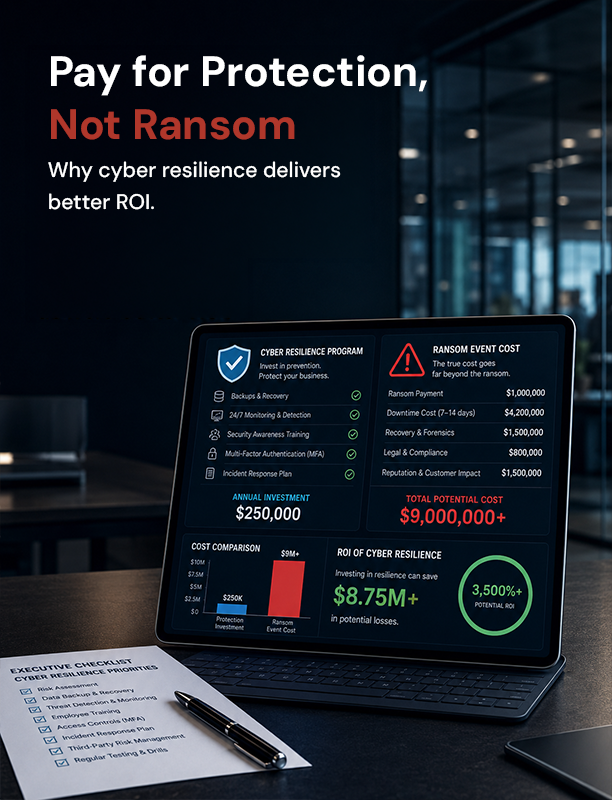
Some owners think, "I'll just pay the CA $50,000 and get my keys back." This is a myth. Statistics show that 80% of businesses that pay a ransom are targeted a second time because the hackers know you are a "payer."
Metric | Reactive (The Hit) | Proactive (Netclues Build) |
Direct Cost | CA $250k+ (Ransom + Legal + Recovery) | Standard Dev Budget |
Downtime | 14–21 Days | 0 Days (Immutable Backups) |
Reputation | Permanent Damage | "Security-First" Brand Trust |
How much does ransomware recovery cost for an Edmonton small business? In 2027, the average recovery cost for a mid-sized firm in Alberta is hovering around $250,000 when you factor in everything. Compare that to the cost of Managed Detection and Response (MDR) for SMEs, which monitors your system 24/7 for a fraction of that price.
Funding Your Fortress: Edmonton-Based Cybersecurity Grants for 2027
We know that "sticker shock" is real. Small businesses have tight budgets. But in 2027, there are many ways to get the government to help pay for your security upgrades.
1. The Canada Digital Adoption Program (CDAP) 2027
The federal government has kept this program alive to help us stay competitive.
- The "Boost Your Business Technology" Grant: You can get up to $15,000 to hire a digital advisor. You can use this to have Netclues build a roadmap for your Secure FinTech app development Canada project.
- BDC Interest-Free Loan: Once you have your plan, you can get up to $100,000 in interest-free money to actually buy the servers, hire the developers, or set up secure cloud backup solutions for ransomware recovery.
2. PrairiesCan: Regional Artificial Intelligence Initiative (RAII)
Hackers are using AI, so you should too. PrairiesCan offers funding for businesses to adopt AI-driven tech. You can use these funds to hire dedicated mobile app developers who can integrate AI-powered phishing protection into your internal apps. This isolates your financial data from your public website, making it much harder to reach.
3. Alberta Innovates: Digital Traction Program
If you are a tech startup in Edmonton, this is for you. Alberta Innovates helps "de-risk" your tech. This is perfect if you need a Ransomware-proof payment gateway integration but don't have the full capital upfront. It helps you build a custom solution rather than using a "one-size-fits-all" plugin that hackers already know how to break.
4. Alberta Security Infrastructure Program (ASIP)
While this started for physical buildings, the 2027 update allows you to recover costs for professional security risk assessments (up to $10,000). This is a great way to fund your first PIPA compliance audit.
Local Incident Response Contacts
There are certain important numbers that must be readily available if you notice that your screen is red and flashing a timer. You immediately need to stop reading and call these given numbers:
- Edmonton Police Service (EPS) Cybercrime Unit: 780-423-4567. Ask for support from the specialized cyber task force.
- Office of the Information and Privacy Commissioner (OIPC) Alberta: 1-888-878-4044. You must report breaches here to avoid PIPA fines.
- Alberta Cyber-Security Hub: This is a local group where small businesses share info on recent threats. It is the Best cybersecurity firm in Edmonton for B2B collaborative resources.
Conclusion: Do not allow your innovation to become a liability
Edmonton's tech environment is actually growing too fast to be slowed down by 20th-century security flaws. In 2027, being a "Small Business" is no longer an excuse for poor security. The hackers don't care about your size; they care about your data.
By focusing on secure mobile app development with biometric encryption and using Managed Detection and Response (MDR) for SMEs, you turn security from a "cost" into a "competitive advantage." Your customers want to know their data is safe. When you show them that you have a step-by-step ransomware response plan for Alberta companies and that you work with the Best cybersecurity firms in Edmonton for B2B, you build a brand that lasts.
At Netclues, we don't just provide FinTech app development services; we provide business continuity. We build assets that are meant to survive the 2:00 AM phone call.
Ready to secure your business's future? Visit Netclues today for a full security audit and development plan.
Frequently Asked Questions About Ransomware Protection for Edmonton Small Businesses
Q. 1. What should an Edmonton small business do first during a ransomware attack?
A. Immediately activate your incident-response plan and isolate affected devices from wired and wireless networks to limit the spread. Use a clean device to contact your IT or incident-response provider. Preserve ransom notes, timestamps, and relevant logs, and avoid wiping systems or attempting improvised recovery. Contact law enforcement and legal counsel as appropriate, and assess whether privacy breach reporting is required.
Q. 2. How can small businesses in Edmonton prevent ransomware attacks?
A. Small businesses can reduce ransomware risk by using multi-factor authentication, applying security updates promptly, implementing endpoint protection, restricting user privileges, filtering email, and training employees. Maintain offline or immutable backups and test restoration regularly. Secure remote access, cloud services, APIs, and payment integrations. A documented incident-response plan and periodic security assessments help identify weaknesses before attackers exploit them.
Q. 3. How much does ransomware recovery cost for an Alberta small business?
A. Ransomware recovery costs vary according to business size, the extent of encryption or data theft, downtime, forensic investigation, legal obligations, and system restoration needs. Expenses can include lost revenue, specialist response services, customer notifications, and rebuilding compromised infrastructure. Obtain an incident-specific assessment rather than relying on a single average. Prevention, tested backups, and recovery planning can reduce potential losses.
Q. 4. Is paying a ransomware demand the best way to recover business data?
A. No. Paying a ransom does not guarantee that criminals will provide working decryption keys, delete stolen information, or stop targeting the business. Payment may also create legal, sanctions, insurance, and operational complications. Before making a decision, consult qualified incident-response specialists, legal counsel, and your insurer. Evaluate clean backups, available recovery methods, business continuity requirements, and the risks of further extortion.
Q. 5. What are Alberta businesses required to do after a personal information breach under PIPA?
A. Alberta organizations subject to the Personal Information Protection Act (PIPA) must assess whether a breach involving personal information creates a real risk of significant harm. If the statutory reporting threshold is met, the organization must notify Alberta's Information and Privacy Commissioner without unreasonable delay. The Commissioner may require notification to affected individuals. Seek current legal guidance and consult the official OIPC requirements rather than assuming every incident triggers identical obligations.
Q. 6. What is the difference between ransomware prevention and ransomware recovery?
A. Ransomware prevention aims to stop attacks or reduce their likelihood through patching, authentication controls, endpoint security, employee training, and secure system design. Recovery focuses on restoring operations after an incident through containment, forensic investigation, clean backups, system rebuilding, and validation. Effective cybersecurity combines both approaches. Prevention reduces exposure, while tested recovery procedures help limit downtime when preventive controls fail.
Q. 7. Are cloud backups enough to protect a business from ransomware?
A. No. Cloud backups alone are insufficient if attackers can access, encrypt, delete, or corrupt them using compromised accounts. Businesses should use isolated or immutable backup copies, separate administrative credentials, strong authentication, and restricted backup permissions. Follow a documented retention policy and test restoration regularly. A reliable recovery strategy should also define recovery time objectives, recovery point objectives, and procedures for rebuilding clean systems.
Q. 8. How does managed detection and response help small businesses?
A. Managed Detection and Response (MDR) combines security monitoring, threat investigation, and incident-response support to help detect and contain suspicious activity. Depending on the service, it may include endpoint telemetry, threat hunting, and assistance with remediation. MDR can provide capabilities that smaller internal IT teams lack, but coverage varies by provider. Review response times, monitoring scope, escalation procedures, and service-level commitments before choosing a solution.
Q. 9. How long does ransomware recovery take?
A. Recovery can take anywhere from hours to weeks or longer, depending on the attack's scope, the availability of clean backups, the complexity of affected systems, and whether data was stolen. Businesses with documented recovery procedures and regularly tested backups are generally better positioned to restore operations. Establish recovery priorities in advance, beginning with critical services, identity systems, and the infrastructure required to operate securely.


